
Filling technology selection
Linear vs Rotary Filling Machine
A linear filler moves bottles along a straight path; a rotary filler carries them around a filling carousel. Neither arrangement determines the filling principle or best purchase by itself. Compare accepted bottles per shift for your actual SKU schedule, then check format parts, cleaning, access and retained equipment. There is no universal BPH threshold that makes one arrangement the correct choice.
Request a Machine Configuration ReviewMachine selection and configuration
When to Shortlist Linear or Rotary Filling
| Production question | Investigate linear when… | Investigate rotary when… |
|---|---|---|
| Production schedule | The proposed cycle meets required shift output across the planned batches. | The proposed carousel meets sustained output on the planned package family. |
| Bottle and cap variety | The specified guides, nozzles and closure adjustments cover the SKU list with manageable setup work. | Every required star wheel, guide, neck-handling and cap component is identified for that same list. |
| Product behavior | The valve or dosing system suits the beverage, viscosity, foam and particles. | The valve sequence and available filling time suit the beverage at the proposed carousel speed. |
| Layout and service | A straight conveying path fits the retained equipment and required access. | Carousel size, inlet/outlet orientation and maintenance zones fit the measured floor plan. |
| Changeovers and cleaning | Measured setup, cleaning and restart losses leave sufficient production time. | Those same measured losses remain acceptable; rotary does not automatically mean slow changeovers. |
| Expansion | The proposal states how output can increase and which modules would change. | The proposal states the supported rate range, format limits and surrounding-equipment needs. |
Machine selection and configuration
Worked Example: Nameplate Speed Is Not Shift Output
Illustrative arithmetic only—not Allot Tech ratings or typical linear/rotary performance. Assign these inputs to real proposals only after test evidence is available. Net output = running rate × productive hours × accepted-bottle fraction. Productive hours here already exclude setup and cleaning: do not deduct the same losses again through an efficiency factor.
| Input or result | Illustrative proposal A | Illustrative proposal B |
|---|---|---|
| Scheduled shift | 8 hours | 8 hours |
| Setup, cleaning and restart | 1 hour | 2 hours |
| Productive time after these losses | 7 hours | 6 hours |
| Running rate on the agreed bottle | 3,000 BPH | 4,000 BPH |
| Accepted-bottle fraction | 98% | 98% |
| Accepted bottles per shift | 3,000 × 7 × 0.98 = 20,580 | 4,000 × 6 × 0.98 = 23,520 |
| If B instead loses 3 hours to changeovers | Unchanged: 20,580 | 4,000 × 5 × 0.98 = 19,600 |
Machine selection and configuration
Ask Both Suppliers to Demonstrate the Same Job
- Run the same beverage, bottle, closure and fill basis; document the limits of any substitute test liquid.
- Time from the last accepted bottle of SKU A to the first accepted bottle of SKU B, including cleaning and restart rejects.
- Record accepted output, stops, rejects and operator interventions over an agreed duration.
- Show service access, cleaning connections, cap replenishment and format-part removal.
- Itemize format parts, controls handoffs, utilities and future-SKU exclusions.
Machine selection and configuration
Continue Your Machine Selection
Calculate required BPH
Translate the production schedule into a reference rate with one clearly defined loss allowance.
Calculate required BPHCompare process integration
Linear/rotary describes motion; monoblock/separate describes combined operations. Resolve both decisions.
Compare process integrationChoose the filling process
Match the pressure and thermal route to the beverage independently of machine motion.
Choose the filling processCatalog equipment evidence
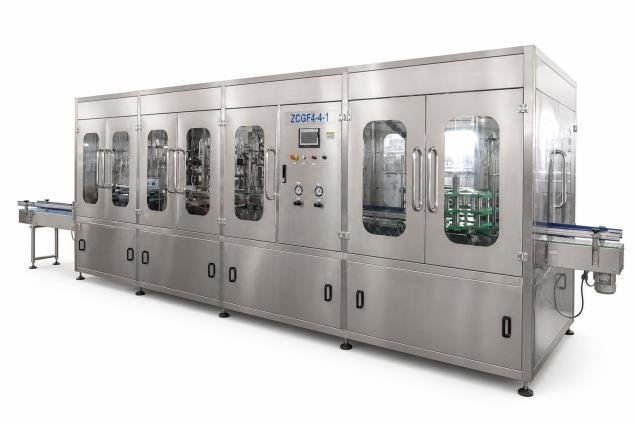
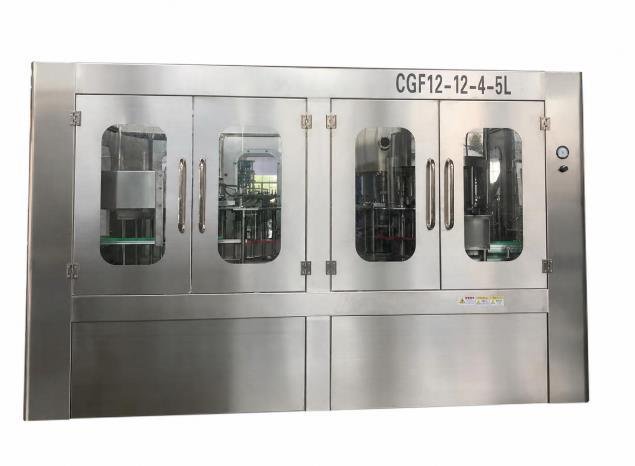
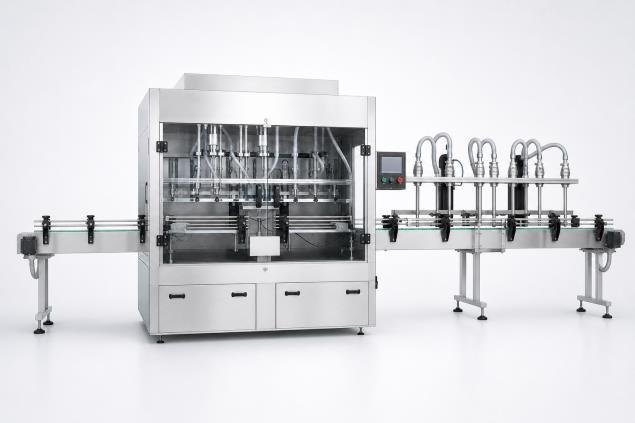
Linear and Rotary Equipment References
Use the images to frame footprint, access, transfers and format-change questions; they do not establish an automatic capacity threshold.
Engineering decision guide
Continue the buyer decision path
Use these pages in sequence to understand, compare, plan, choose and prepare a project-specific request.
-
Beverage Filling Machines
Compare filling machine families by beverage behavior, filling basis, package handling and the interfaces required around the filler.
-
Linear vs Rotary Filling Machine
Compare linear and rotary arrangements using output, SKU range, changeover, space, integration and maintenance requirements.
-
Filling Machine Technical Specification Checklist
Create one controlled specification covering duty, formats, output, interfaces, utilities, materials, controls, tests, documents and exclusions.
-
Filling Machine Selector
Generate a preliminary technology route from beverage, process, package and output inputs, then verify open assumptions with an engineer.
-
Request a Filling Machine Recommendation
Send a structured machine brief with the known product, package, output, site and project facts, while marking unknowns openly.
Buyer questions
Frequently asked questions
Is a rotary filler automatically the better high-speed choice?
No. Product fit, package handling, format range, changeover, access, space and the sustainable output basis still determine the arrangement.
Is there one BPH threshold where rotary becomes better than linear?
No universal threshold applies. The decision changes with fill time, number of heads or valves, package formats, cleaning, changeovers, floor space and maintenance strategy.
Which arrangement is easier to change over?
That depends on the actual guide parts, recipes, filling heads or valves, closure system, tooling access and cleaning sequence. Require a demonstrated changeover method and time basis.
At what BPH should I switch from a linear to a rotary filler?
There is no universal cutoff. Compare machines on the same beverage, package, shift schedule, changeover workload and acceptance criteria. A speed quoted on a different bottle cannot establish which arrangement will deliver more accepted bottles in your shift.
Last reviewed:
Next machine-selection action
Request a Configuration Based on Your Production Task
Send the beverage, bottle/cap drawings, production schedule, target accepted output and equipment you plan to retain. Allot Tech can review the machine scope and items requiring confirmation.