
Filling technology selection
3-in-1 Filling Machine: PET Bottle Rinser, Filler and Capper
A 3-in-1 filling machine combines bottle rinsing, product filling and cap application in one coordinated monoblock. The XGF, RXGF and DXGF catalog families use this arrangement for different beverage duties. Three operations are integrated; product preparation, bottle making, labeling and packing are separate scope decisions.
Request a 3-in-1 Review
Machine selection and configuration
How a Rinser-Filler-Capper Works
- Bottle entry and rinsing: receive the approved empty bottle, transfer it into the rinsing section and apply the agreed rinse medium. Confirm drainage and the bottle-handling arrangement.
- Product filling: transfer the rinsed bottle into the filling section. Use the beverage-specific normal-pressure, hot-fill or isobaric process and agreed fill acceptance.
- Cap application and discharge: apply the specified closure and transfer the capped bottle to the outfeed. Agree closure checks and the controls handoff to downstream equipment.
Compare catalog machine families
Three PET Filling Machine Families: XGF, RXGF and DXGF
Compare the beverage application first. All capacities below are catalog references on a 500 ml basis, not guaranteed output on every bottle. Configuration and current availability are confirmed in the project proposal.
XGF Water Filling Machines
Normal-pressure rinsing, filling and capping for still drinking water. Compare nine reference models from 6,000 to 42,000 BPH, then specify your bottle, cap and required operating output.
Compare XGF models and specifications
RXGF Juice and Tea Filling Machines
PET juice and tea filling references from 4,000 to 32,000 BPH across eight models. A hot-fill proposal also needs the validated product process, bottle heat resistance and cooling sequence.
Compare RXGF models and process requirements
DXGF Carbonated Beverage Filling Machines
Isobaric PET bottling references from 4,000 to 28,000 BPH across eight models. Compare the machine together with product temperature, dissolved CO2, pressure supply and foam acceptance.
Compare DXGF models and carbonation requirementsMachine selection and configuration
What “3-in-1” Includes—and What Still Needs a Scope Line
| Boundary | Confirm inside the monoblock proposal | Do not assume included |
|---|---|---|
| Rinsing | Bottle inversion/handling, rinse nozzles, medium supply and drainage connection | Water treatment, air treatment or rinse-medium generation |
| Filling | Product-contact path, valve arrangement, bottle format and fill controls | Mixing, thermal processing, chilling, carbonation or a complete CIP station |
| Capping | Cap type, capper heads, feed arrangement and application acceptance | Every closure format, all future change parts or downstream inspection equipment |
| Line integration | Infeed/outfeed limits, electrical interface and agreed interlocks | Bottle blower, full conveyor network, coder, labeler, packer or palletizer |
Machine selection and configuration
Inputs to confirm before configuration
- Rinsing medium and contact time
- Filling principle and product condition
- Cap type and application method
- Bottle transfer and change parts
- Cleaning access and enclosure
- Infeed, outfeed, controls and floor-space interfaces
Machine selection and configuration
Check Whether Integration Fits Your Plant
Monoblock vs separate machines
Compare retained equipment, access, transfer points and responsibility before choosing an integrated arrangement.
Monoblock vs separate machinesLayout and service clearance
The catalog machine envelope is not the complete operating footprint. Include access, guarding and format-part removal.
Layout and service clearanceAcceptance test scope
Test the agreed beverage, bottle and cap together with output, fill quality, closure and fault/restart checks.
Acceptance test scopeCatalog equipment evidence
What Connects to a 3-in-1 Monoblock
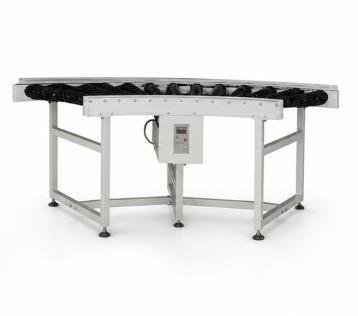
The rinser-filler-capper still needs defined empty-bottle supply, discharge transfer, coding or labeling and line-control responsibilities.


Engineering decision guide
Continue the buyer decision path
Use these pages in sequence to understand, compare, plan, choose and prepare a project-specific request.
-
3-in-1 Filling Machine
Evaluate rinsing, filling and capping as one coordinated monoblock only after the container, product path and closure interfaces are defined.
-
Filling Technology Comparison
Compare gravity, hot-fill and isobaric routes against the same product, package, acceptance and cleaning facts.
-
Filling Machine Capacity Guide
Define required saleable output by bottle size, product, shift pattern and planned efficiency before comparing nominal machine rates.
-
Filling Machine Selector
Generate a preliminary technology route from beverage, process, package and output inputs, then verify open assumptions with an engineer.
-
Request a Filling Machine Recommendation
Send a structured machine brief with the known product, package, output, site and project facts, while marking unknowns openly.
Buyer questions
Frequently asked questions
When should a project avoid assuming a 3-in-1 monoblock?
Do not assume a monoblock when the rinse, filling or closure duty is undefined, or when an existing line cannot accept its bottle-transfer, control or floor-space interfaces.
What does a 3-in-1 filling machine do?
It coordinates container rinsing, beverage filling and closure application on one platform. The exact rinse method, filling principle, cap system, enclosure and controls remain configuration-specific.
Is a 3-in-1 machine a complete beverage bottling line?
No. Bottle making or supply, product preparation, conveyors, inspection, coding, labeling, secondary packing and pallet handling are separate scope items unless the proposal includes them.
Is a 3-in-1 filling machine a complete beverage production line?
No. The name describes three coordinated operations: rinsing, filling and capping. Beverage preparation, bottle production, treatment or chilling, labeling, secondary packing and pallet handling are separate unless the equipment quotation explicitly includes them.
Last reviewed:
Next machine-selection action
Check whether three operations belong on one platform.
Describe the rinse, fill, closure, package family and interfaces for a reference monoblock configuration.